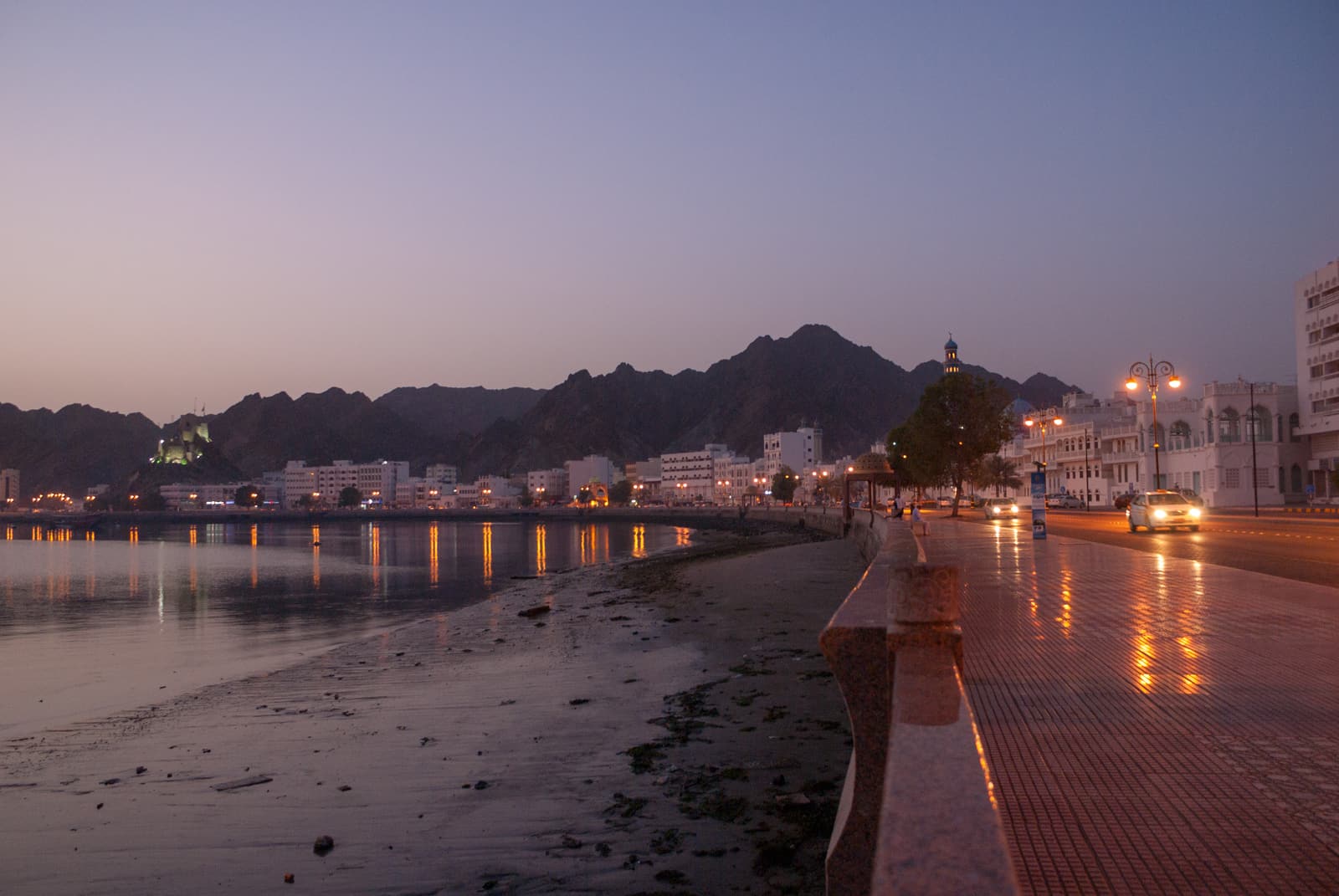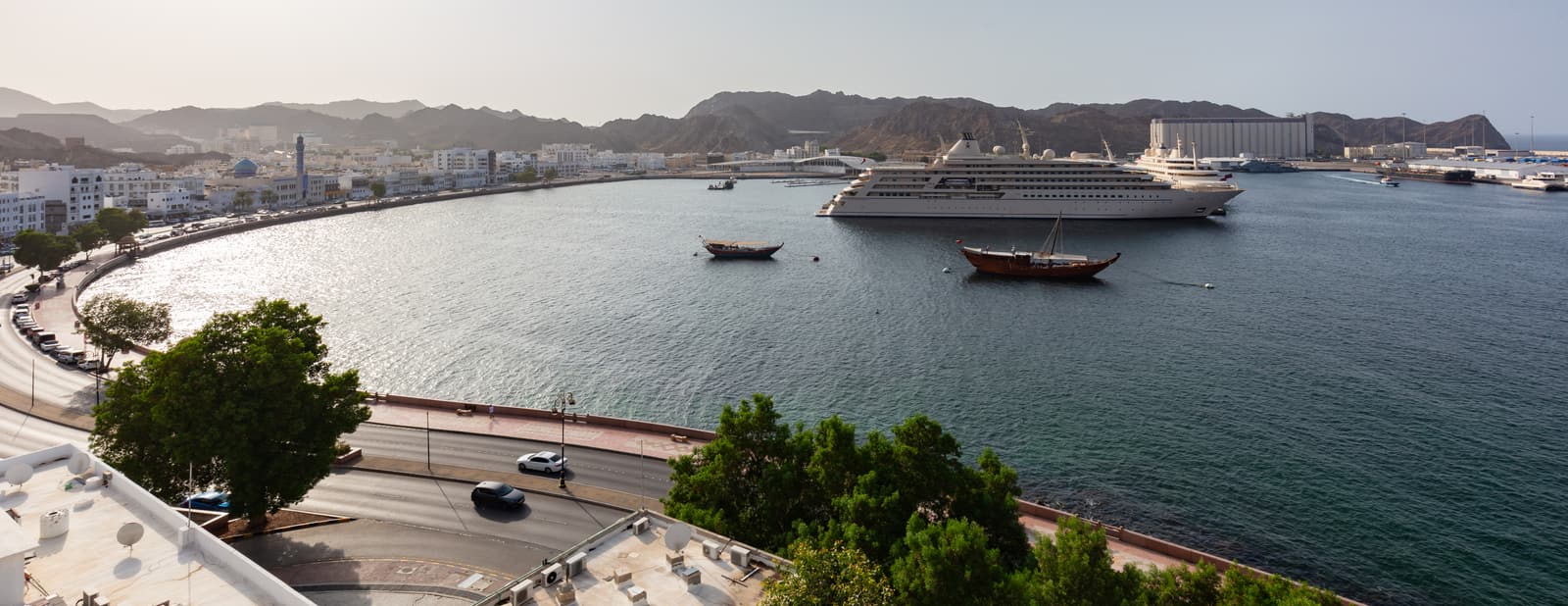
Muscat is not a city of blockbuster attractions stacked one on top of another. It is a place to slow down: a morning in a marble mosque, an afternoon in a museum, an evening walking the corniche with half of Muscat, and days out to wadis, forts and dunes that are more dramatic than anything else in the Gulf. This guide covers how to plan it.
How long do you need?
- One day — the Grand Mosque in the morning, Old Muscat and the National Museum, then Mutrah Souq and the corniche at sunset. This is what a cruise stop allows.
- Three days — add a boat trip (dolphins or Daymaniyat snorkelling) and a day at Wadi Shab and the Bimmah Sinkhole.
- Five days — add Nizwa and Jebel Akhdar, and a night in the Wahiba Sands.
- A week or more — loop the country: Muscat, Sur and the turtles of Ras al Jinz, the Wahiba, Nizwa and the mountains.
Getting there and around
Muscat International Airport is well connected to Europe and the Gulf, cruise ships dock in Mutrah, and the road from Dubai takes five to six hours. In the city, taxis, ride-hailing and rental cars are the norm. Our getting here guide covers all of it, including visas.
What to see
 Muscat city
 Sultan Qaboos Grand Mosque
Oman’s great modern mosque
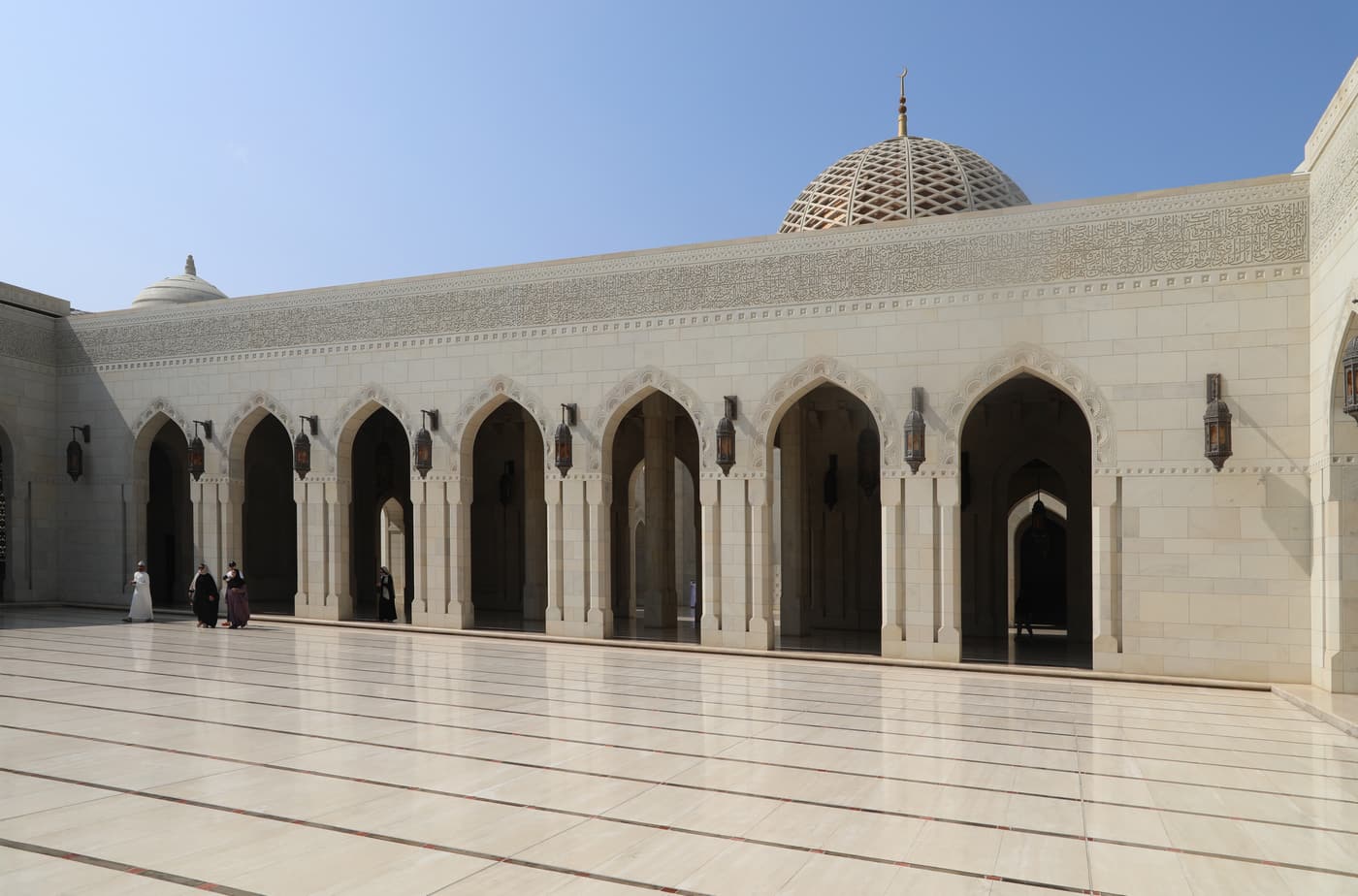
Opened in 2001, the Grand Mosque is Muscat’s unmissable sight: pale sandstone and marble courtyards, a soaring minaret, and a main prayer hall with one of the largest hand-woven carpets in the world beneath a vast crystal chandelier. Visitors are welcome on weekday mornings.
 Muscat city
 Mutrah Corniche & Souq
Muscat’s old harbour and its bazaar
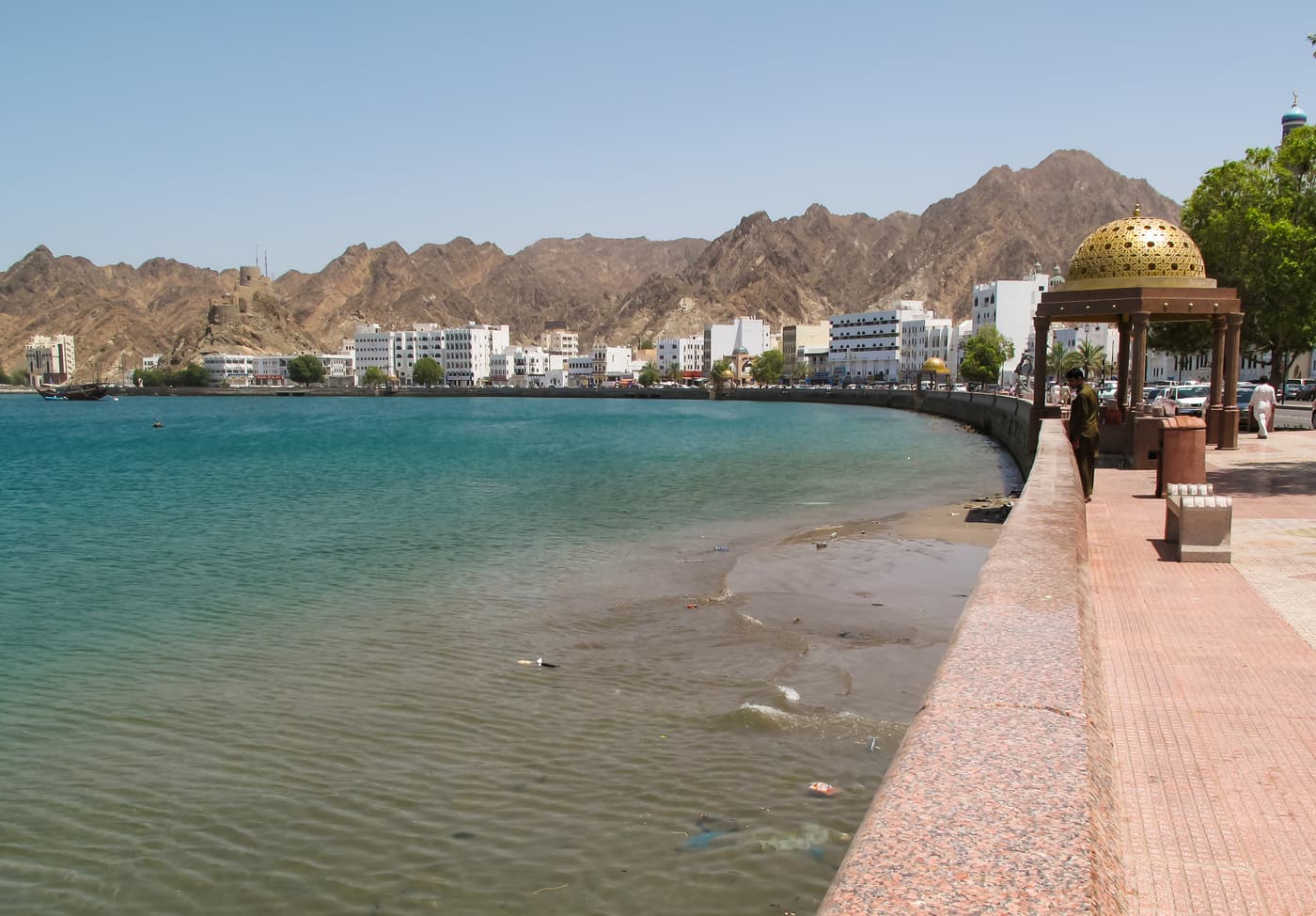
A curving seafront promenade of white merchant houses, mosques and dhows, with one of the oldest souqs in Arabia behind it. Come in the late afternoon for frankincense, silver and khanjars, stay for the corniche at sunset.
 Muscat city
 Old Muscat
Palace, forts and a hidden harbour
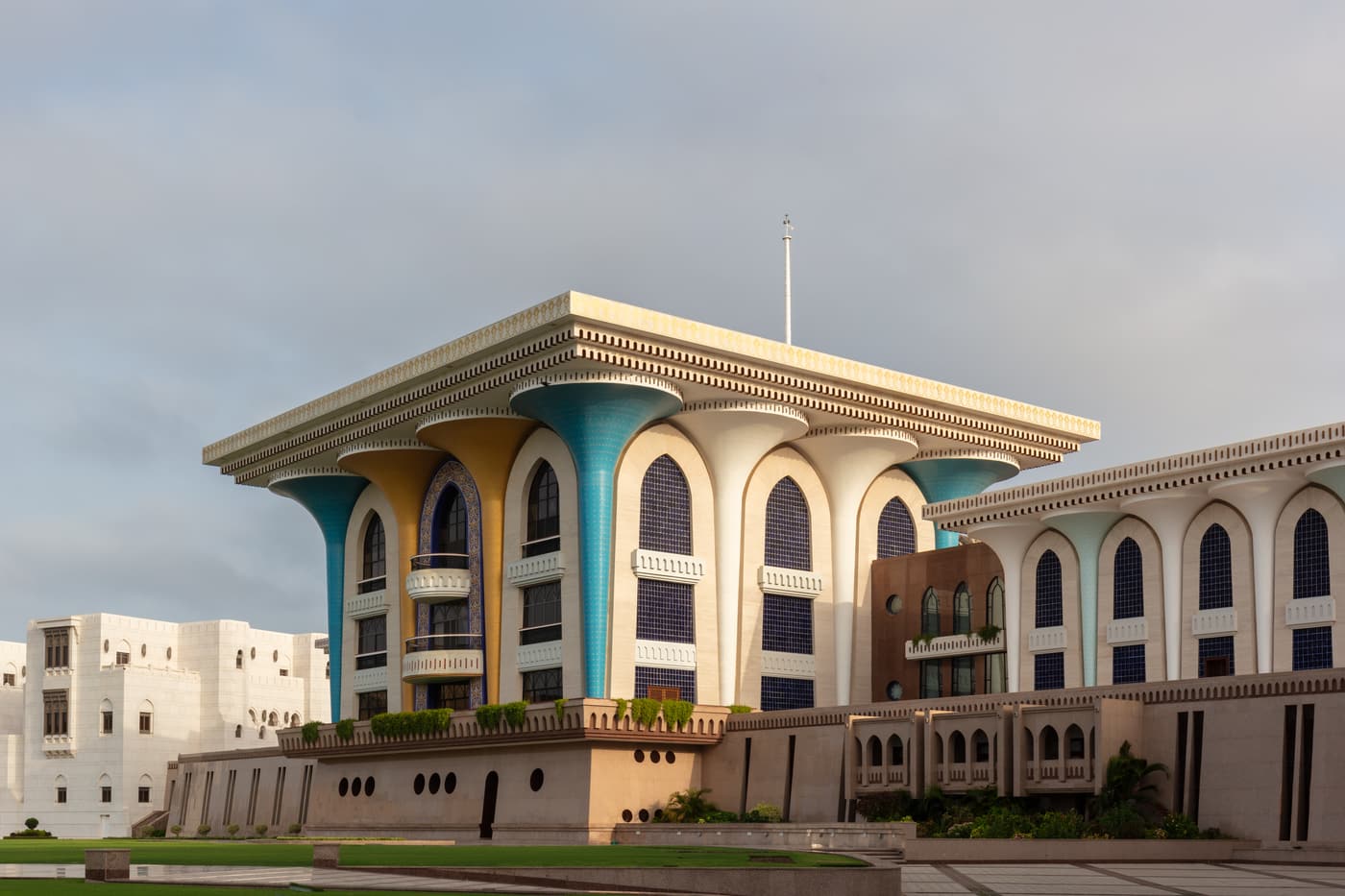
The original walled city is a tiny cove guarded by two Portuguese-era forts, Al Jalali and Al Mirani, with the ceremonial Al Alam Palace between them. The National Museum, Bait Al Zubair and the Muscat Gate Museum are all a short walk away.
 Coast & islands
 Daymaniyat Islands
Turtles, coral and clear water
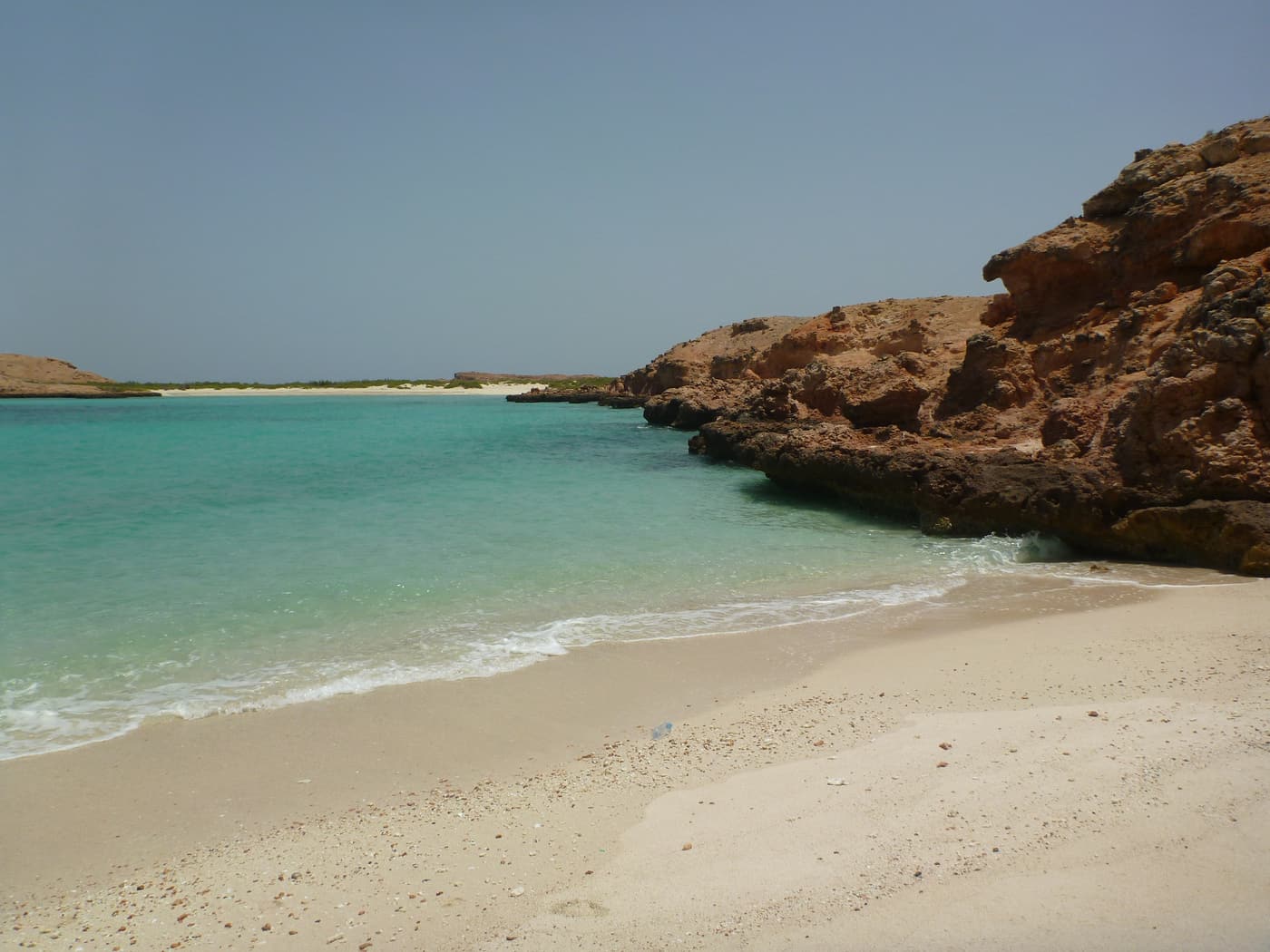
A protected chain of nine small islands off the coast west of Muscat, with coral reefs, turtles and nesting seabirds. Boats leave from marinas on the city’s western side for some of the best snorkelling and diving in Oman.
See all of them, with directions and tours, in our things to see guide.
What it costs
Oman is not a bargain-basement destination, but it is good value by Gulf standards. The Omani rial (OMR) is a strong currency — one rial is worth about US$2.60 — so prices look low until you convert them.
| Item | Typical price |
|---|---|
| Sultan Qaboos Grand Mosque | Free |
| National Museum of Oman | A few rials for non-Omanis |
| Bait Al Zubair museum | A couple of rials |
| Nizwa Fort | A few rials |
| Biryani or grilled fish in a local restaurant | Roughly 2–5 OMR |
| Taxi across the city | Roughly 5–10 OMR — agree first |
| Half-day city tour | From about €35 |
| Daymaniyat snorkelling trip | From about €60 |
What to eat
Omani food is gentler than its neighbours’: rice dishes perfumed with dried lime, cardamom and rosewater rather than chilli. Try shuwa (lamb marinated in spices and slow-cooked underground, traditionally for Eid), mashuai (spit-roasted kingfish with lemon rice), harees and majboos. Every welcome comes with kahwa — cardamom-scented coffee — poured into tiny cups with dates, and a sticky slab of Omani halwa.
Mutrah and Ruwi have excellent, inexpensive South Asian restaurants; Shatti Al Qurum and the hotels offer everything from sushi to steak. Alcohol is served only in licensed hotels and some restaurants.
Where to stay
Muscat’s hotels fall into three groups:
- Beach resorts — palatial properties like Al Bustan Palace, The Chedi and the resorts of Bandar Jissah, each a destination in itself.
- City hotels — in Qurum, Shatti Al Qurum, Ruwi and Mutrah, better value and closer to restaurants and the corniche.
- Mountains and desert — clifftop resorts on Jebel Akhdar and camps in the Wahiba Sands for a night or two outside the city.
We compare the best of each on our where to stay page.
Practical details
- Money: Omani rial (OMR), divided into 1,000 baisa. Cards are widely accepted in the city; carry cash for souqs, taxis, wadi boats and villages.
- Language: Arabic is official; English is widely spoken in hotels, shops and tourism.
- Dress: cover shoulders and knees in public. Swimwear belongs at the pool or beach; at wadis, swim in a T-shirt and shorts over your swimwear.
- Weekend: Friday and Saturday. Many shops and the souq close on Friday morning for prayers.
- Safety: Oman is one of the safest countries in the world for travellers. The main risks are heat, sun and flash floods in wadis after rain.
- Photography: ask before photographing people, especially women, and do not photograph military sites or palaces up close.
- What to pack: light, loose clothes that cover shoulders and knees, a scarf (for women at the mosque), water shoes for wadis, a hat, high-factor sunscreen and a warm layer for the mountains and desert nights in winter.
- Ramadan: eating, drinking and smoking in public during daylight are not permitted, even for visitors. See our when to visit page.
Common mistakes
- Arriving at the Grand Mosque after 11:00, or on a Friday.
- Underestimating distances: the city is long, and the best day trips are two hours or more away.
- Visiting in July and trying to do anything outdoors between 10:00 and 16:00.
- Hiking into a wadi when rain is forecast in the mountains — flash floods are real.
- Trying to drive up Jebel Akhdar in a saloon car — the police checkpoint will turn you back.
- Seeing only the city. Oman’s magic is outside it — see the tour comparison.