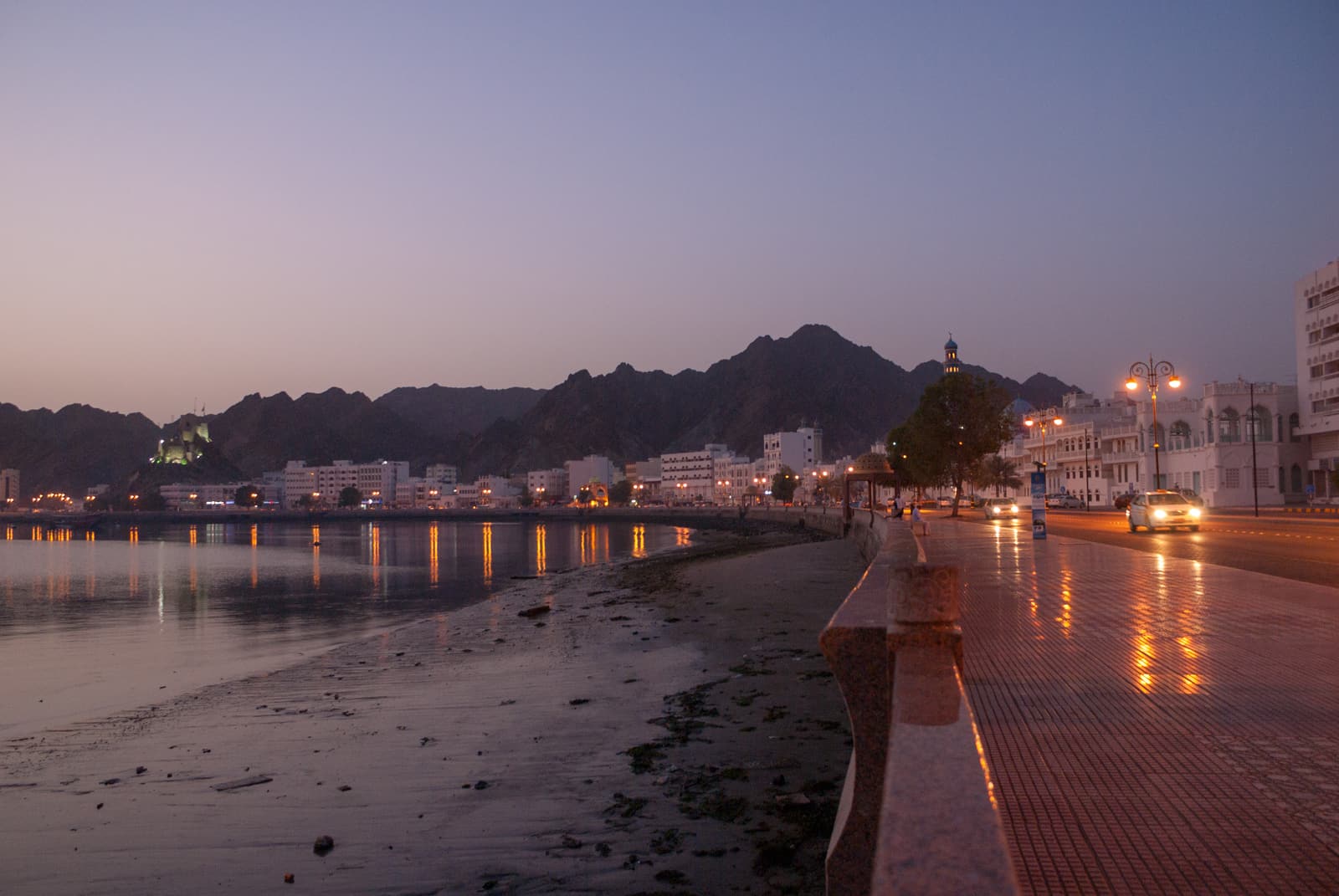
Muscat has a hot desert climate on the edge of the sea: mild, sunny winters and long, fiercely hot and humid summers. Rain is rare. The short answer is October to March, with November to February the most comfortable of all.
Muscat month by month
| Month | Day / night | Sea | Verdict |
|---|---|---|---|
| January | 25 / 17 °C | ≈ 24 °C | Perfect city weather; occasional showers |
| February | 26 / 18 °C | ≈ 24 °C | Ideal; busy with cruise ships |
| March | 29 / 21 °C | ≈ 25 °C | Warm and excellent; getting hotter |
| April | 34 / 25 °C | ≈ 27 °C | Hot middays; mornings still good |
| May | 39 / 30 °C | ≈ 30 °C | Very hot; mountain trips only |
| June | 40 / 31 °C | ≈ 31 °C | The hottest month; turtle season peaks |
| July | 38 / 31 °C | ≈ 30 °C | Hot and humid; low prices |
| August | 36 / 29 °C | ≈ 29 °C | Humid; turtles still nesting |
| September | 36 / 28 °C | ≈ 29 °C | Still hot; hatchlings at Ras al Jinz |
| October | 34 / 26 °C | ≈ 29 °C | Heat breaking; warm sea, fewer crowds |
| November | 30 / 22 °C | ≈ 27 °C | Excellent all round |
| December | 27 / 19 °C | ≈ 25 °C | Superb; festive-season prices |
Figures are approximate long-term averages for Muscat; individual days can be several degrees hotter.
Winter: November to February — the best of the year
Days in the mid-20s, cool evenings, a warm sea and very little rain: this is Muscat at its best, and the season when cruise ships, European holidaymakers and Gulf weekenders all arrive. Book popular tours — especially Daymaniyat snorkelling — and resort rooms a few weeks ahead around Christmas, New Year and school holidays. The mountains and the desert can be genuinely cold at night.
Shoulder months: October, March and April
Warmer and quieter. October still feels like summer in its first half, but the sea is warm and often very clear. March is lovely; by late April the middle of the day is too hot for walking in the city, so plan outdoor sightseeing for the early morning and late afternoon.
Summer: May to September — hot, and we mean it
Daytime highs of 38–42 °C are normal, and the coast is humid. Hotels drop their prices sharply and the city is quiet, but outdoor activity is limited to early mornings and evenings. The escape routes are upwards — Jebel Akhdar and Jebel Shams are far cooler — or south to Salalah, where the khareef monsoon turns the hills green from roughly late June to September.
Ramadan
The Islamic holy month moves about eleven days earlier each year; in 2027 it is expected to begin around the second week of February. During Ramadan, eating, drinking and smoking in public during daylight hours are prohibited for everyone, many restaurants open only after sunset, and opening hours of sights (including the Grand Mosque) are shortened. Hotels continue to serve guests discreetly. The evenings, when families break the fast and the streets come alive, are a memorable time to be here — just plan around the quieter days.
National holidays
Oman’s National Day falls in November and fills the city with lights and flags. Eid al-Fitr and Eid al-Adha bring several days of public holiday, when Omanis head for the mountains and wadis and popular spots get busy.
When to avoid
- June to August, unless you are coming for the turtles or a resort deal.
- Wadis after heavy rain — flash floods can be sudden and dangerous, even when it is sunny where you are.
- Friday mornings for the souqs and the Grand Mosque — shops close for prayers and the mosque is closed to tourists.